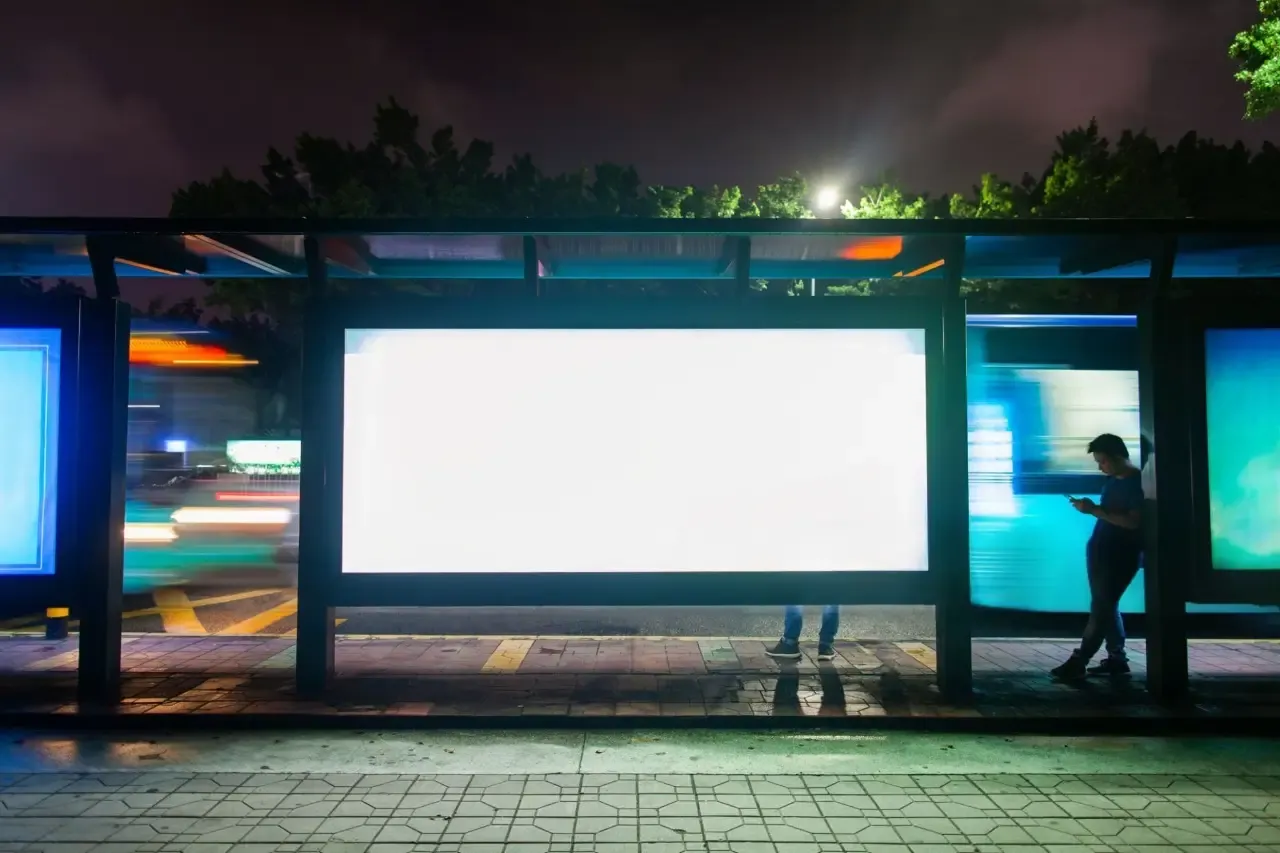
Commercial Outdoor Lighting Ideas That Improve Visibility After Dark
When the sun goes down, your business does not disappear, but poor lighting can make it feel that way. Good commercial outdoor lighting is not just about brightness. It helps people feel safe, find your location easily, and notice your brand even from a distance.
Whether you run a retail store, office building, or manage a public space, the right lighting setup can make a big difference. In this blog, we will walk you through effective commercial outdoor lighting ideas that improve visibility while also adding to the overall look of your space.
Why outdoor lighting matters more than you think
See it is obvious good lighting does more than help people see. It helps them feel comfortable and safe. A well-lit exterior can reduce accidents, prevent unwanted activity, and guide visitors to entrances or parking areas without confusion.
For businesses, lighting also plays a role in branding. Clean, bright lighting sends a message that your space is professional and well cared for. On the other hand, poor lighting can make even a great business look uninviting. It is very energy-efficient, long-lasting, and provides consistent brightness that works well in different outdoor settings.
That’s why investing in commercial LED outdoor lighting is becoming a popular choice. It is very energy-efficient, long-lasting, and provides consistent brightness that works well in different outdoor settings.
LED floodlights for wide area visibility
If you need to light up bigger areas like parking lots or the outside of your building, LED floodlights are a good choice. They spread light across a wide space, so people can see clearly without too many dark spots.
This is one of the more useful commercial outdoor lighting ideas because it solves visibility. When the area is properly lit, people can walk or drive without confusion, which helps avoid small accidents. Another plus is that these lights don’t consume as much electricity and don’t need to be replaced again and again.
A few simple things you can keep in mind while installing them:
- Don’t place them too low or too high, find a suitable height where the light spreads properly
- Try not to point the light directly into people’s eyes or towards the road
- Instead of one very bright light, using a few balanced lights usually works better
Pathway lighting for safety and direction
Pathway lighting may seem like a small detail, but it plays a big role in guiding people. Whether it is walkway leading to your entrance or paths in a commercial complex, proper lighting helps visitors move confidently.
When planning your commercial outdoor lighting, think about how visitors move through your space. Where do they enter? Where do they walk? Lighting those routes makes the experience smoother and more comfortable. These types of lighting are especially useful for hotels, office parks, hospitals, and retail spaces.
Facade lighting to highlight your building

Facade lighting means highlighting the front part of a building using lights.
At night, when it gets dark, a building without proper lighting can look plain and dull. With facade lighting, the building becomes clearly visible and the business looks more attractive. This type of commercial outdoor lighting works well for:
- Retail stores
- Restaurants
- Corporate offices
- Showrooms
With the right setup, facade lighting can make your business look more professional and inviting, even after dark.
Outdoor signage lighting for better visibility
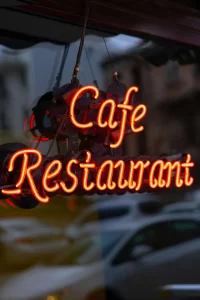
Your sign should be easy to read at any time, especially at night. That is where outdoor signage lighting really helps.
If your sign is not properly lit, people might just pass by without noticing it. But when it’s clearly visible, it becomes much easier for customers to spot your business, even from a distance, especially on busy roads or crowded areas.
There are a few ways to approach this:
- Backlit signs give a clean and modern feel
- You can use spotlights to focus directly on the sign
- LED Module strips work well if you want even lighting across the surface
Using proper outdoor signage lighting not only improves visibility but also strengthens brand recognition.
Lighting for parking areas
Parking lots are one of the most important areas to light properly. People should feel safe getting in and out of their vehicles, and drivers need to clearly see markings, curbs, and other cars.
Tall pole lights with wide coverage work best here. These are often part of a larger commercial outdoor lighting plan that focuses on safety first.
Using commercial LED outdoor lighting in parking areas is especially useful because it provides bright, consistent light without flickering. It also handles long operating hours better than traditional bulbs. Make sure there are no dark spots.
Smart placement makes all the difference
Even the best lights won’t help much if they are placed poorly. Positioning is just as important as the type of lighting you choose.
Here are a few simple tips:
- Do not place lights so that their rays hit people’s eyes
- Pay attention to entryways, exits, and frequently visited places
- Use multiple layers of lighting rather than single sources of illumination
- Prevent any deep shadows from forming or dark corners from remaining untouched
When planning commercial outdoor lighting ideas, think about balance. You want enough light to see clearly, but not so much that it feels harsh or uncomfortable.
Final thoughts
Wherever there is good lighting, people do notice that. Plus, when it is done right it eventually improves customer experience. By adapting the right commercial outdoor lighting ideas, such as LED floodlights, pathway lighting, facade lighting, and outdoor signage lighting, businesses can create spaces that are easy to navigate and hard to ignore.
If you are planning to upgrade your lighting or signage, it helps to work with experts who understand both quality and real-world needs. At Sun Sign & Technologies, we are helping businesses create long lasting and good quality signage. We have years of experience in this domain and our professional team is always there to work out on your queries 24×7. And this definitely helps you choose the best material for better results.

How One-Way Vision Window Film Secure Privacy & Do Branding
If you run a business, you already know how important it is to balance visibility and privacy. You want your space to look open and welcoming, but at the same time, you don’t want outsiders peeking in all the time. This is where one-way vision window film becomes a smart and practical solution. This film lets people inside see outside clearly, while people outside cannot see in. It also turns your plain glass into a strong marketing tool through creative window branding.
So, you not just adding privacy, you are also promoting your business every day without extra effort. In this blog, let us break down how it works, why businesses love it, and how you can use it for both window branding and privacy.
What is one-way vision window film?
One-way vision window film is a kind of material which can be used on glass surfaces. It contains perforations, which make it possible to see the surroundings from only one side, but not from another side.
From the outside, people see a printed design, logo, or advertisement. And from inside, you still get a clear view of what’s happening in the outside world. This makes it perfect for offices, retail shops, cafes, and even commercial buildings.
Many people also call it a privacy window film, because it helps keep the inside space protected from unwanted attention.
How it protects your business privacy
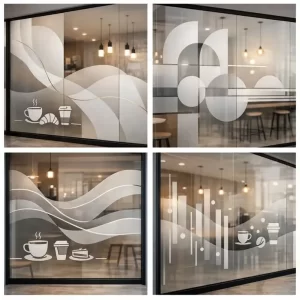
Privacy is a big reason businesses install privacy window film, especially if your office or shop is located in a busy area. Whether it is a retail store, office, or salon, you don’t always want full visibility from outside. Here’s how it helps:
Strong daytime privacy
Privacy window film one way is very helpful for businesses that need privacy during the day. In offices, it keeps meetings safe from outside view, while clinics can maintain patient confidentiality. Shops can also hide stock areas or cash counters quite easily. From outside, people only see the design on the glass, not what’s happening inside.
Keeps natural light coming in
One big advantage of one-way vision window film is that it does not block sunlight like curtains or frosted glass. Instead, it allows natural light to enter the space, keeping it bright and fresh.
Around 60–70% of natural light can still pass through, which means your space feels open, not closed or dull. Because of this, you don’t have to depend too much on artificial lights during the day.
Better comfort for staff & customers
When people feel like they are being watched, it can make them uncomfortable and distracted. This film solves that problem by creating a sense of privacy. Employees can work freely without worrying about people staring in from outside, which helps them focus better and be more productive.
UV protection & less glare
Films that are of good quality may be able to block up to 99% of ultraviolet rays. This protects items such as furniture, flooring, and goods from fading due to UV exposure. It also reduces glare, which is especially helpful for people working on screens or using devices.
Turning glass into a branding space
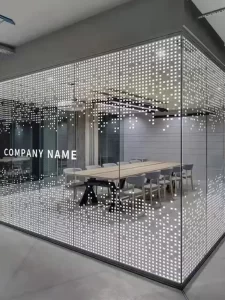
Your shop or office windows can actually become a powerful advertising space. With one-way vision window film, you can print:
- Your brand logo
- Promotional offers
- Pictures of your product
- Contact details
- Creative visuals
This way, people can see your business from just walking by, but you don’t have to pay additional costs for installing any advertisement boards outside.
Window branding using one-way vision window film makes your glass into billboards working 24 hours per day and reaching many eyes each day.
It’s cheap compared to digital signs yet packs the same punch. Retailers see quick returns, studies show one-way vision window film boost walk-ins by 20-30%.
Designing tips for maximum graphic visibility
- Use bold colors and strong contrast like (black + white, red + yellow) so your design stands out clearly, even with the tiny holes in the film.
- Add solid color blocks to hide perforations and make the design look clean from outside.
- Aim for high quality prints to avoid blur or pixelation on large window prints.
- Choose the right perforation ratio based on your need:
- 70/30 for strong branding and less see-through
- 50/50 for better visibility from inside
- It is recommended that a sample be tested on your glass first before proceeding with installation.
- Use vector images for crisp edges (like logo files .ai, .svg) even at larger sizes.
- Tiny text (less than two inches) should be avoided since it is difficult to read.
- Add a white layer behind dark designs to make colors look brighter and more visible.
Ideal places to use it
A privacy window film one way can be used in many types of business spaces. The following is a list of some of the places where this kind of film can be utilized:
- Retail stores
- Corporate Office cabins and meeting rooms
- Restaurants and cafes
- Hospitals and clinics
- Shopping complexes
- Showrooms
In such spaces, it helps keep things private while still allowing the area to feel open and comfortable.
Common mistakes to avoid while using one-way vision window film
While a one-way vision window film is a great solution, small mistakes can reduce its effectiveness. Knowing what to avoid can help you get the best results from both privacy and window branding.
- Ignoring lighting conditions
- Overloading the design
- Choosing low-quality film
- Poor placement of design elements
- Skipping professional help
Conclusion
One-way vision window film nails privacy by blocking daytime views while letting light pour in. It also makes window branding more effective by turning plain glass into eye-catching displays that attract customers. Plus, with benefits like UV protection and easy maintenance, it’s a practical choice for businesses.
Whether you need professional, high-quality signs, and banners, you should look no further than Sun Sign & Technologies for custom signage. With an experienced team, a variety of high-end materials including one-way vision films, and many years of expertise, our company will ensure that your business develops a lasting brand presence.

What’s the ROI of Investing in Professional Business Signs?
When most business owners think about marketing spend, they think about Google ads, social media, maybe an influencer or two. But one powerful marketing tool that many businesses underestimate is professional business signage.
That sign outside your store is working 24 hours a day, 7 days a week, without any monthly subscription fee. No algorithm changes. No cost-per-click. Just your business, visible to everyone who walks or drives past.
Now you must be thinking about the ROI of investing in professional business signs and whether it is really worth the money.
What ROI actually means for signage
When we talk about ROI, or Return on Investment, we are simply measuring the value you get back compared to what you spend. In the case of professional business signage, ROI helps you understand whether the money invested in your sign is generating real business results. For signage, ROI is about how effectively that sign contributes to visibility, customer traffic, and sales over time.
ROI in signage is measured through outcomes such as:
- Increased brand visibility
- Higher foot traffic
- Improved customer trust
- More conversions
Why every business needs strong signage
In any business, signage is much more than just a board with your name on it. It plays a big role in how people see your brand and whether they decide to walk in or move on. A good sign speaks for your business before you even get a chance to talk to the customer. Let us look at why signage really matters.
1. It improves visibility

No matter how great your products or services are, they won’t matter if people don’t notice you. A well-designed sign makes your business easy to spot, even in a crowded street or busy shopping area.
For example, if you know LED neon signs. They are bright and eye-catching. They stand out during the day and are even more powerful at night. This kind of visibility helps your business compete, especially in areas where many stores are located close together.
2. It builds brand recognition
Customers usually enter your store after seeing the signage. So we can say that it often is the first impression customers get. The colors, font, design, and lighting all reflect your brand personality. A professional and attractive sign shows that your business is serious and trustworthy.
After some time people start recognizing your sign even from a distance. They may not visit the first time they see it, but repeated exposure builds familiarity. And when they finally need your product or service, your brand is already in their mind.
3. It increases brand recall
A unique and custom sign leaves a lasting impression on your customers. If your signage looks different from others and clearly represents your brand, customers are more likely to remember it. If you just think about how often you recognize certain shops just by their sign. That memory plays a big role in buying decisions. When people remember your brand easily, they are more likely to choose you over competitors.
4. It drives foot traffic and increases conversions
For physical stores, the more people who walk in, the higher your chances of making sales. An attractive sign tells people what you offer and gives them a reason to step inside. This is especially important today when traditional stores are competing with online shopping. When customers can easily buy online, your physical store needs something that pulls them in and that job is done by a good signage.
Key factors that influence ROI

Location and visibility- If your sign is in a busy area where lots of people walk or drive by, more people will see it. But if it is hidden behind trees, poles, or placed where it is hard to notice, fewer people will even know your business exists. This way you are missing potential sales.
Design quality- Your sign should be clear and easy to read. If there is too much text, too many colors, or fancy fonts that are hard to understand, people won’t bother reading it. It is best to keep the design simple rather than keep it complicated.
Lighting- This is especially important for businesses that stay open in the evening. A backlit or illuminated sign keeps your business visible even after sunset.
Consistency with your brand- If your website, logo, and store design all follow one theme, your sign should too. When everything looks connected and consistent, customers trust your business more easily.
Material and build quality- The quality of materials used for your sign matters a lot. If your sign starts fading, cracking, or peeling within a year, it shows your irresponsibility towards your brand. Investing in durable, high-quality materials means your sign will last longer and continue to look good for years.
Conclusion
If you are looking for a marketing investment that keeps delivering without ongoing costs, professional business signage is best. So if your current sign isn’t doing your business justice, now is a good time to fix that. At Sun Sign and Technologies, we help businesses create professional, eye-catching signage that actually delivers results. From LED neon signs to custom outdoor signage, we build signs that represent your brand the right way.

Event Signage Solutions That Guide and Impress Attendees
When people attend an event, whether it is a conference, exhibition, corporate seminar, or trade show they expect things to be organized and easy to find. No one likes feeling lost or confused in a large venue. To solve this issue, event signage becomes extremely important.
Event signage includes all visual graphics like banners, boards, digital screens, and directional signs that help attendees find their way and understand what’s happening at the event. It actually provides information and improves branding and creates a professional impression. In fact, effective signage helps guide attendees, communicate important details, and enhance the overall event experience.
In this blog let us understand how the right event signage solutions can guide attendees and leave a lasting impression.
Why event signage is essential for every event
Have you ever entered a big event and had no idea where to go? You look around trying to find the registration desk or session rooms, but nothing is clear. It can be confusing and honestly a bit frustrating too. This is where event signage really helps.
Event signage makes things much easier. It helps attendees:
- Quickly spot important areas like registration or session halls
- Move around the venue without feeling lost
- Save time instead of asking people for directions again and again
- Feel more relaxed and comfortable in the space
- Focus on enjoying the event instead of worrying about where to go
When attendees can move easily and find everything without facing troubles. Their experience automatically becomes more positive towards the event.
Event signage solutions also strengthen your brand
Event signage is for showing directions, and it also helps people recognize your brand. Every sign at your event gives you a chance to show who you are.
When you use your logo, brand colors, and messaging on signage, people start noticing your brand without even realizing it. As they walk around and see your signs in different places, your brand becomes more familiar to them.
Good event signage solutions also make everything look on point. Right from the entrance to different booths, all signage follows the same style. This makes your event look more organized, professional, and leaves a strong impression on attendees.
Important types of event signage you should use

There are different types of event signage, and each serves a specific purpose. Using the right ensures a smooth and organized experience.
1. Entrance signage
This is the first thing people notice when they walk in. It tells them they are at the right place. Usually, it has the event name, logo, and a welcome message.
2. Directional signage

As the name suggests, this one helps people figure out where to go next. Whether it is the registration desk, session rooms, washrooms, or food area, these signs guide them without confusion. So instead of asking around again and again, they can just follow the signs.
3. Informational signage
Now this is where details come in. Timings, speaker names, session schedules, maybe even a simple venue map. People like knowing what’s happening and when. It helps people plan their time better and not miss something they were actually excited about.
4. Promotional and branding signage
This type of signage silently promotes your brand and sponsors. It includes banners, standees, and backdrops with your logo and brand message. Even if people do not consciously think about it, they keep seeing your brand throughout the event.
5. Safety signage
Not the most exciting type, but definitely important. It shows emergency exits, first aid locations, and important safety instructions. Even if no one needs them, just knowing they are there makes people feel more comfortable.
How event signage improves attendee experience
- Reduces stress and confusion
When event signage is placed around the venue people do not feel lost. They can just look around and figure out where to go next. It saves them from that confusing moment of standing and looking around without direction.
- Saves time
Ever got frustrated because of missing an important session or activity in an event? And the reason? Got lost because of unorganized signage.
When signs are placed properly, people can easily find registration desks, session rooms, and other key areas. This helps them from wasting time searching and they can enjoy the whole event.
- Improves event flow
When attendees know where they are going movement of people goes smooth. This prevents crowd buildup in one place.
- Creates a professional image
When signage looks clean and thoughtfully placed, the whole event feels better managed. Even small details like this make people feel the event is in good hands.
Digital event signage is becoming more popular
Many modern events use digital signage like LED Module displays and screens. They allow you to:
- Display live updates
- Show schedules and announcements
- Highlight sponsors
- Share important information instantly
Best ways for effective event signage solutions
- Keep the message clear and simple
- Place signs strategically
- Use large and clear fonts
- Maintain brand consistency
- Ensure good visibility
Conclusion
Event signage is very important for making any event successful. It helps people find their way easily, saves their time, and makes the whole experience smooth and stress-free. At the same time, it also helps show your brand and makes your event look more organized and professional.
If you are planning an event and need high-quality and reliable signage, choosing the right signage partner really matters. You can contact Sun Sign & Technologies, they have been providing durable, creative, and professional signage solutions since 2007.
How Professional Signage Display Improves ROI for Businesses
Nowadays, in the retail market where competition is increasing every day, just having good content and a website is not enough. For customers, the first impression is often created by your storefront and signage rather than your online presence.
Professional signage is a visual display that shows your business’s brand, message, and identity. Examples for this can be, storefront signs, LED displays, banners, digital screens, or office reception boards. It continuously builds brand credibility and attracts customers.
This investment directly improves your ROI because more foot traffic and engaged customers lead to higher sales and better revenue. In this blog, you will learn how signage displays help increase your business ROI.
They get more attention and visibility
Imagine a customer walking down the street, what is the first thing they notice? The sign outside your store. If your signage is attractive, clear, and well-designed, it naturally grabs people’s attention.
The more people who notice your sign, the greater the chances they’ll stop and come into your store or office. And when people come inside, the chances of them making a purchase increase.
This simply means when visibility goes up, foot traffic increases. And when foot traffic increases, sales improve automatically.
A strong first impression is created

Usually, people judge a business within a few seconds of seeing it, and most of the time, that judgment starts with your signage. Before a customer visits your website, reads reviews, or talks to your staff, they notice your sign.
If your store sign is clean, modern, and well-designed, customers immediately feel that your business is genuine, trustworthy, and offers good quality. This is the moment when the first impression is created.
On the other hand, if your sign looks faded, outdated, or poorly designed, customers may start to doubt the quality of your products or services.
That is why professional signage helps build trust, which directly leads to better conversions, higher sales, and a stronger ROI.
Improves brand recognition
Many businesses offer good products and services, yet people still do not remember them. Ever wondered why? This usually happens because their branding is not visible enough.
Professional signage solves this problem by making your brand easy to notice and easy to remember. Well-planned corporate signage solutions help businesses create a strong visual presence and promote their brand 24/7 without any extra marketing cost. Day or night, your signage continues telling people about your brand.
Colors, fonts, and design also play a big role here. When you use your brand colors and logo consistently on your signage, customers start recognizing your brand easily.
For example, when we think of Kalyan Jewellers, we often remember Amitabh Bachchan’s image. That is the power of strong and consistent branding.
So overall, what we meant is that the more recognizable your brand becomes, the more trust you build. And this directly leads to better ROI.
It influences buying decisions
When a customer walks into your store or office, they already have many options in front of them. The question is, what should they look at? What should they choose? And where should they start?
This is where promotional signage and clear calls-to-action really help. As soon as customers see signs like “Today’s Offer,” “Best Seller,” or “Special Discount,” their attention goes straight to those products. Limited-time offer signage creates urgency and encourages impulse buying.
Product highlight signs that show features, benefits, or prices make it easier for customers to understand what they are buying without asking for help. And when customers can decide easily, they are more likely to buy, which ultimately increases ROI.
Supports online marketing
In today’s time, depending only on offline or only on online marketing is not enough. When you add QR codes, website links, or social media handles to your signage, you can directly connect offline customers to your online platforms.
For example, a customer visits your store and scans a QR code on your sign. They can instantly reach your website, product page, Instagram profile, or WhatsApp chat.
When online and offline marketing work together, your reach increases, your conversion rate improves, and your ROI becomes stronger.
Provides long-term cost savings
Professional signage is like a one-time investment. When your signage is made with high-quality materials, it is more durable and does not get damaged easily. This means you do not have to spend money again and again on replacements or repairs.
At the same time, signage keeps promoting your business continuously without any monthly ad cost. Compared to paid ads, where you pay for every click, signage is much more cost-effective in the long run.
Because you save on marketing costs and still get constant promotion, your overall returns increase. And this is one of the main reasons professional signage leads to better ROI.
Wrapping up
Professional signage is about making your business perform better. From creating strong first impressions and increasing brand visibility to guiding customer decisions and boosting conversions, signage plays a direct role in improving ROI.
If you want signage that does more than just look good, working with the right team matters. Sun Sign & Technologies helps businesses to create signage that attracts attention, builds trust of the audience, and supports real business growth. If you are planning to upgrade your signage this is the best time to connect with Sun Sign & Technologies and explore signage solutions that fit your needs.
Importance of Signage in Restaurants: Menus & Branding
Wherever we go, we follow signboards without having to ask anyone. These signs quietly tell us what to do and where to go. The same thing happens in signage for restaurants.
When we enter a restaurant, even before placing an order, we notice the board outside, the menu inside, and the small signs near the counter. All these signs guide the customer and make the process easier. Because of this, the customer does not feel confused and the experience stays smooth.
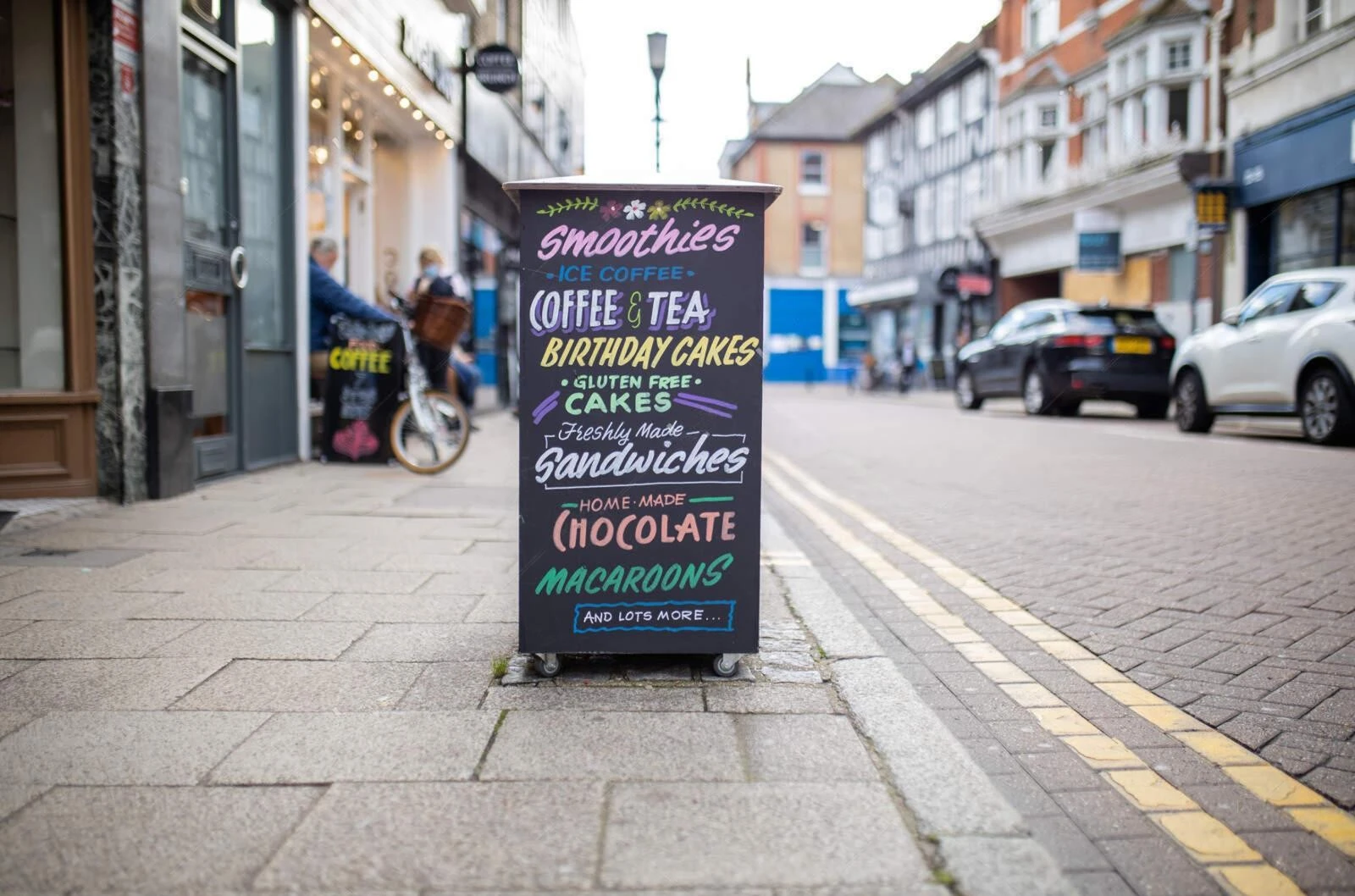
The menu board for restaurant are especially important here. When a menu board uses simple words, clear lettering, and a neat layout, customers can decide faster what they want to order. Branding signs, like the restaurant’s logo and design, give the place its identity. All of this together makes the restaurant feel friendly, well-organized, and trustworthy, which improves the overall customer experience.
What is signage for restaurants?
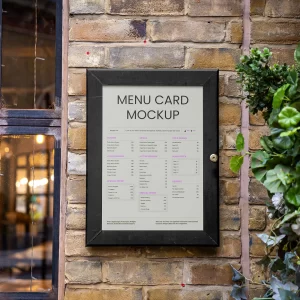
Restaurant signage includes the signs placed inside and outside a restaurant that give information to customers. Their main job is to guide customers and help the restaurant run smoothly every day.
Signage helps customers without causing confusion. For example:
- The outside sign shows where the restaurant is and whether it is open or closed
- The menu board for restaurant shows what food items are available and their prices
- Signs like “Order Here” or “Pick Up Here” tell customers what to do next
Signage also makes daily restaurant work easier. Clear menu boards help customers order faster, so lines move quickly. Direction signs help manage crowds, especially during busy hours. Promotion signs save staff time because they do not have to explain offers to every customer.
Menu board for restaurant
Menu boards are usually the first thing customers look at. Whether it is a digital screen, a chalkboard or a printed board the menu tells people what you serve and helps them decide what to order. Customers don’t have to ask too many questions or feel confused. When items are easy to read, properly spaced, and grouped well, people feel more confident about their choices.
Outdoor signage
Outdoor signage for restaurants is what attracts people from the street. It tells them who you are and what kind of food you offer. If someone is walking by and sees a clear sign with your restaurant name and logo, they are more likely to remember it. Choosing a good outdoor signage also helps first-time visitors feel confident about walking in, especially in crowded areas.
Indoor signage
Indoor signage guides customers to ordering counters, restrooms, seating areas, or pickup points, which reduces confusion. Indoor signs can also be used to share messages like house rules, Wi-Fi details, or ordering steps. This saves staff time, especially in self-service restaurants.
Branding signage
Branding signage helps customers recognize and remember your restaurant. It includes things like your logo on the wall, brand colors, taglines, and design elements that match your restaurant’s theme. These signs show customers what your restaurant stands for and what kind of experience they can expect.
How signage improves ambience
Signage for restaurants plays a big role in setting the mood of a restaurant. When customers walk in, they don’t just notice the food, they notice how the place feels. That is why well designed signage helps create that feeling in a very natural way. Matching colors, fonts, and styles help the restaurant feel comfortable and pleasant. The right signage makes people enjoy sitting, eating, and spending time there.
Faster ordering and better customer flow
When customers can easily read the menu boards and signs they are not then confused for where to sit, what to order. This saves time, reduces crowding, and helps the staff work without stress, especially during busy hours.
Promoting offers and special items
Signage is a simple way to show deals, new items, or daily specials. When customers see these signs, they notice them quickly and often decide to try them. A small sign near the counter or on the menu board can easily menu can grab attention and help sell more.
Building strong brand recognition
When a restaurant uses the same logo, colors, and style on all signs helps people remember the restaurant. Over time, customers start recognizing the brand easily. This is really helpful in building trust and makes them more likely to visit again and recommend the place to others.
Final thoughts
Signage in restaurants helps customers understand your menu, makes ordering easier, supports promotions, and creates a strong brand image.
If you are a restaurant serious about improving customer experience through great signage, partnering with a trusted signage provider can be a good decision. Sun Sign & Technologies offers high-quality signage materials and solutions that help your brand stand out both inside and outside your restaurant.
Reach out to us today to create menu boards and branding signs that improve customer experience and make your business stand out.

Corporate Signage Solutions: Banners & Hoarding For Branding
People see many ads everywhere, so it is hard for brands to get noticed. Companies need a clear and simple way to show their presence. This is where corporate signage solutions help. Banners and hoardings allow companies to display their name and message in a big and visible way.
Banners help companies share updates and important information quickly, while hoardings create strong brand visibility on a larger scale. Together, they help businesses communicate with a wide audience at the same time and maintain a consistent brand presence across different locations. They help businesses stay visible, look professional, and be remembered by people over time.
What is corporate signage?
Corporate signage is actually the visual signs that display a company’s name, logo, and message clearly in public and workplace spaces. These signs are commonly seen outside offices, on buildings, along roads, at events, and in other high-visibility areas.
For companies operating in more than one location, having clear and consistent signage is very important to build recognition and trust.
Why brands still spend on Banners and Hoardings?
Even in the digital era, outdoor signage remains powerful. People may skip online ads, but they cannot avoid what they see on roads, buildings, and public spaces.
Banners and hoardings help brands reach a large number of people at the same time. A single hoarding placed in a busy area can be seen by thousands every day. Banners are also useful because they are easy to install and can be used in launches and events.
When the same brand message is seen again and again, it stays in people’s minds. Over time, this builds recognition and trust, which is why brands continue to invest in banners and hoardings.
Common uses of banners and hoardings
- Office branding: A lot of companies put banners or hoardings outside their offices so people can easily find them. This helps visitors, clients, and even employees easily recognize the brand.
- Retail promotion: In retail areas, banners are commonly used to talk about sales, discounts, or new products. They catch the eye of people passing by and quickly tell them what the store is offering at that time.
- Construction sites: When a building or project is under construction, hoardings are put up at the site. Their main purpose is to cover the area so that people outside cannot see inside and to ensure safety. At the same time, they also show which company is working on the project.
- Events and exhibitions: At any events or exhibitions, placing banners helps guide visitors and share basic brand information. Basically, they make it easier for visitors to understand who the company is and what it does.
- Multi-location branding: When a company has offices in different cities, they usually use the same type of banners and hoardings everywhere. This keeps the brand looking familiar. It also helps people recognize it no matter where they see it.

Choosing the right location for maximum impact
Where a banner or hoarding is placed matters a lot. Even the best design will not work if people cannot see it properly. Companies usually choose locations where there is high foot traffic or regular vehicle movement.
These can be busy roads, marketplaces, office areas, and main entrances. It is also important to make sure the signage is not blocked by trees, poles, or other buildings.
Banners should be placed at eye level so people can read them easily, while hoardings should be visible from a distance. A well-chosen location helps the message reach more people and makes the signage more effective without extra effort.
Basic design tips for effective corporate signage solutions
- Keep it minimal: For effective signage, it is best to keep it simple. Don’t put too much text or too many images. People usually see signs for just a few seconds. So just convey your message.
- Use big fonts: The letters should be visible enough that it is easy to read from a distance. Avoid fancy or small fonts.
- Stick to brand colors: It is essential to use the same colors as your logo and other marketing materials. This keeps the brand consistent.
- Focus on one main message: Highlight the most important thing you want people to notice, it could be a product, offer, or your company name.
Conclusion
Corporate signage solutions like banners and hoardings still play an important role in branding. They help companies stay visible, be seen by more people, and keep their brand present in everyday places like roads, offices, and public areas. But for signage to actually work, it needs to be planned and done the right way.
At Sun Sign and Technologies, we provide corporate signage solutions that focus on clear and consistent brand communication. Our signage works well for hospitals, offices, commercial spaces, construction sites, and public locations. Connect with us to explore signage solutions designed to make your brand more noticeable and effective.
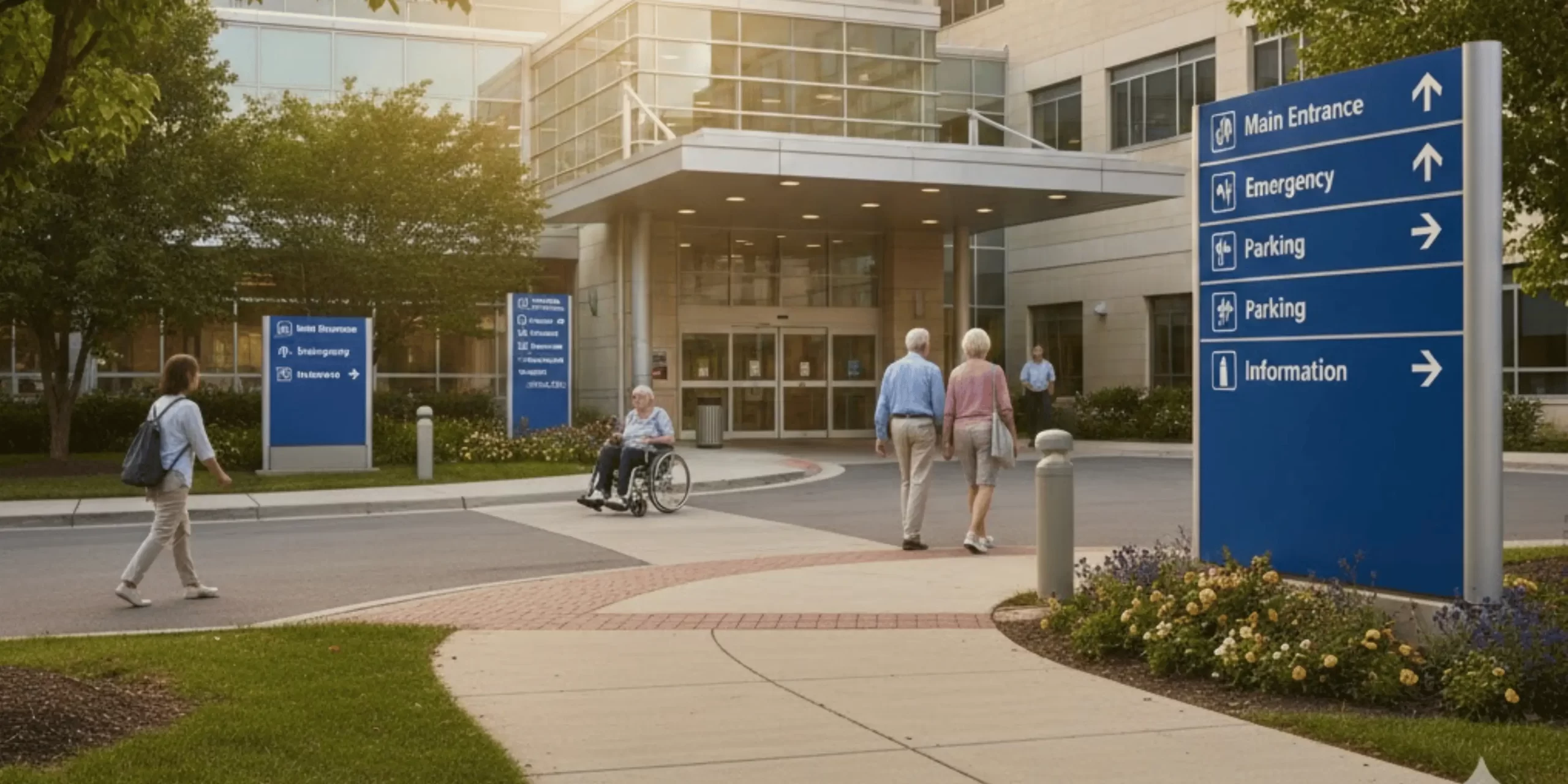
How Effective Signage For Hospitals Improves Accessibility & Navigation
Whenever we visit a hospital, most of us don’t really know where to go first. We are often unsure where the OPD is, where the admission room is, or where the reception and different departments are located. Hospitals are usually very large buildings with multiple floors and many sections.
During emergency situations, this confusion becomes even more stressful. Patients and their families are already worried, and not knowing the right direction can make them feel panicked and overwhelmed. This is exactly where signage for hospitals plays a very important role.
Clear and well-placed hospital signboards help people find the right place quickly, reduce stress, and make the entire hospital experience smoother and safer for everyone.
Why signage for hospitals matters so much
Hospitals usually have large campuses with multiple buildings, departments, floors, and entrances. Without clear signs, people can easily feel lost. This can lead to stress, missed appointments, and delays in emergency care.
Good hospital signage helps:
- Patients reach departments on time
- Visitors move confidently without anxiety
- Doctors and nurses save time
- Emergency vehicles reach the right entrance quickly
How hospital signage improves accessibility
Hospitals are visited by all kinds of people, elderly patients, people with disabilities, children, and those who are coming for the first time. And not everyone is familiar with the layout of the hospital. Clear fonts, easy symbols, and visible colors play an important role in accessibility. When text is easy to read and symbols are familiar, people understand directions quickly. People don’t have to stop and ask staff for help at every turn.
- For old age patients, walking long distances or asking for directions again and again can be very tiring. Clear signboards help them move slowly but confidently without confusion.
- For people with disabilities, signage that clearly points to ramps, elevators, and accessible restrooms helps them feel independent and safe inside the hospital.
- First-time visitors often feel lost as soon as they enter a hospital. Simple direction signs guide them step by step, so they don’t feel nervous or rushed.
Role of wayfinding signage inside hospitals
Because hospital layout may be a bit complicated with many floors and departments. Wayfinding signs help people know where they are and how to reach the place they need. In hospitals, wayfinding signage includes:
- Department direction boards
- Floor directories
- Corridor signs
- Room numbers and arrows
When visitors can find their way on their own, it reduces stress and anxiety. Staff also get fewer questions about directions, so they can focus on patient care.
Importance of outdoor signage for hospitals
The first thing people notice when they arrive at a hospital is the outdoor signage. Clear signs at the entrance help visitors know exactly where to go.
Outdoor signage for hospitals includes:
- Main entrance signboards
- Emergency and ambulance entry signs
- Parking guidance signs
- Building name and department boards
These signs help visitors and emergency teams find the right place quickly. Clear outdoor signs are very important for ambulances and emergency vehicles because they can save valuable time.
Why retro reflective vinyl is important in hospital signage
At night or during rain and fog, regular signs may be hard to see. Retro reflective vinyl ensures that signage for hospitals remains visible when headlights or streetlights shine on it. That is where retro reflective vinyl are one important material used in modern hospital signage. This material reflects light back toward its source, making signs visible even in low light or darkness. Retro reflective vinyl is especially useful for:
- Outdoor hospital signboards
- Emergency route signs
- Parking and traffic guidance signs
- Safety and warning signs
Keeping hospitals safe with clear signs
Hospitals must follow strict safety and regulatory guidelines. Proper signage supports compliance by clearly marking:
- Emergency exits
- Fire safety equipment
- Restricted areas
- Hazard warnings
Clear signage also makes sure the hospital follows safety laws. When signs are easy to see and understand, accidents and risks are reduced.
How good signage builds trust and confidence
When hospital signs are clear and easy to follow, people feel more relaxed and confident. Patients and visitors don’t get lost and can find their way easily.
Good signage also shows that the hospital cares about safety and convenience. When signs are easy to read and consistent, it builds trust in the hospital and gives everyone a positive and confident experience while moving around.
Explore Guide to Choose Outdoor Signage
Final thoughts
Effective hospital signage helps patients, visitors, and staff move around easily and safely. Clear indoor and outdoor signs, combined with materials like retro reflective vinyl, make navigation simple and improve overall patient experience.
At Sun Sign & Technologies, we offer advanced signage solutions using high-quality materials, including retro reflective vinyl, to meet hospital requirements. With years of experience in signage industry we help hospitals create clear, easy-to-follow signs that improve accessibility, guide visitors efficiently, and enhance the overall patient experience.
Guide to Choose Outdoor Signage for Business
Outdoor signage is one of the simplest and most effective ways to attract customers. Whether someone is walking by your store or driving past your building, your sign is the first thing they notice. It works as a silent salesperson, helping people identify a business, understand what it offers, and notice it even in busy surroundings.
With so many types of outdoor signage available today, choosing the right outdoor signage for business can feel overwhelming, especially when you want something that looks good, lasts long, and clearly represents your brand. In this blog, we will discuss how to choose outdoor signage for your business.
Why outdoor signage matters for any business
Outdoor signs are the face of your business in today’s digital world. A good sign builds credibility, grabs the audience’s attention, increases foot traffic, and helps people remember your brand.
When your signage looks clean, clear, and professional, it creates a strong first impression that customers trust. It also works around the clock, promoting your business even when you are not present.
Factors to consider before selecting outdoor signage for business
Understand the purpose of your sign
Before choosing any outdoor signage be particular about the purpose, why you need it. Some signs are meant to show your brand name, while others guide people to the entrance or highlight offers.
When the purpose is clear, the message that you want to convey becomes simpler and more effective. It also helps you decide the right size, design, and placement. A sign with a clear goal always performs better than one trying to do everything at once.
Location and placement strategy
Where you place your sign can completely change how people notice it. A well-designed sign won’t help much if it sits behind a tree or is too high to read.
Choose a spot that gets natural attention, whether from walkers or people driving by. Think about lighting, traffic movement, and how far customers will be when they see it. Good placement makes your sign work harder without extra effort.
Choosing the right materials for durability
Outdoor signs deal with sunlight, rain, dust, and wind every single day, so choosing the right material is important. Materials like metal, acrylic, flex, or LED should be picked based on how long you want the sign to last and where it will be placed.
Durable materials may cost a bit more at first, but they save money later by avoiding frequent repairs. The best material depends on the climate, the desired lifespan of the sign, and the type of message it needs to display.
Focus on visibility and readability
A sign should be easy to read the moment someone looks at it. Clear fonts, simple words, and good color contrast help people understand the message quickly, even if they are moving. People also tend to read signs better when the message has a rhythm or flow, like short lines that tell a story rather than a single block of text.
Budget planning
When budgeting for outdoor signage for business, think beyond the initial purchase. Instead of only choosing the cheapest option, look for something that offers value and lasts longer. Think about material, size, lighting needs, and installation costs. A slightly higher investment in quality often saves money in the long run because you don’t need frequent repairs or replacements. So plan a budget prior, this will give you a sign that performs well without overspending.
Match the signage style with brand personality
Outdoor signage should reflect who you are as a business. Colors, fonts, shapes, and sizes all play a part in creating your identity.
For example:
- A kid’s store may choose bright colors.
- A hotel may prefer warm lighting and elegant fonts.
- A tech company may go for sleek, modern designs.
Keeping your signage consistent with your brand personality makes your business easier to recognize and remember. It also helps create a strong first impression before a customer even walks in.
Final thoughts
Choosing the right outdoor signage for a business is not as easy as it seems. When a sign is planned with the right purpose, location, materials, visibility, and style, it quickly becomes one of the most effective tools for attracting people and building trust.
Now that you know what to look for, Sun Sign & Technologies enters. They provide a wide range of outdoor signage that is both durable and fully customizable. Whether a business needs a small storefront sign, a large hoarding, or a brightly lit LED display, they can help create it to match the brand’s personality and style.
Their team works closely with clients to choose the right materials, size, and design, ensuring the signage not only looks good but also lasts long in outdoor conditions. If you want to explore signage options, contact them today to discuss your requirements.
Different types of Outdoor Signage: Choose the right one
Bringing your brand in front of people becomes much easier with outdoor signage. Whether you run a small cafe, a big corporate company, or a retail store, the right signage helps customers notice you, trust you, and remember you. These days, businesses invest in outdoor signs for promotion because they actually work.
Just like how you can spot McDonald’s famous yellow sign or the green Starbucks logo from far away, or the bright boards local stores use to attract customers. But with so many options available, choosing the right type of outdoor signage can feel confusing.
In this blog, we will explore the different types of outdoor signage, how to choose the right one, and where each type works best.
Key types of outdoor signage
Frontlit Signs
These are one of the most common types of signs. They are illuminated from the front so the text and graphics look clear. You have mostly seen them on local clothing stores, salons, medical shops, or food joints. They offer strong visibility during the day and night.
They work well for retail stores that want clear and simple branding, restaurants and cafes in busy markets, and service providers like clinics, coaching centres, and mobile shops.
Backlit Signs
These are perfect for premium stores and high-end showrooms. A backlit sign has a glow coming from behind the surface, giving it a modern and luxurious look. Brands like Zara, Samsung, and Apple often use backlit letters to create a premium feel. These signs make a strong brand impression and help your storefront stand out, especially after sunset.
Flex Boards
Flex boards are one of the most affordable outdoor signage options. They are made from strong material that is printed and stretched over a frame. They last long, are easy to replace, and give a good branding effect even on a small budget. You have probably seen them in local markets, automobile workshops, grocery shops, and roadside stores.
Flex boards are best for small shops, wholesale stores, seasonal or temporary setups, or businesses that frequently update their designs.
Glow Sign Boards
Glow sign boards are designed for visibility at night. They use fluorescent or LED lighting so the text looks bright, even from far away. These signs instantly catch attention and guide customers toward your shop. They are mostly ideal for places that need attention after sunset like medical stores, petrol pumps, and highway restaurants.
LED Signage
These signs are bright, modern, and energy-efficient, which is why they are trending today. LED signage can be simple LED letters or full digital display screens. They grab attention within seconds. You can easily spot them in multiplexes, event venues, and shopping malls.
Also, if you need to update offers, menus, or announcements regularly, digital LED boards are very helpful.
ACP Signage
ACP (Aluminium Composite Panel) signage is commonly used by banks, corporate offices, franchise stores, and premium boutiques or showrooms because it gives a clean and classy look. These are weather-resistant and long-lasting, making them a great choice for long-term outdoor branding.
Simple tips for choosing the right signage
Choosing the right signage is not as easy as it looks. You have to consider many things, your brand style, business goals, location, and target audience. So when you are selecting signage, keep these points in mind:
Purpose: What is the purpose of your signage, brand promotion, advertising, or sharing information? It is important to know this first. Your goal will help you pick the right type of signage.
Location: Where you are planning to place the signage matters a lot. Is it on a busy road, inside a mall, or in an office park? Based on the placement, you can decide what works best. High-traffic areas usually need bold and eye-catching designs.
Visibility Needs: Think about how much visibility you want. Do you want your brand to be noticeable at night? Or do you want something that can be seen clearly from a long distance?
Budget: Every signage type has a different cost. So once you understand your needs, narrow down the options and then choose according to your budget.
Brand image: The color, style, material, and design of your signage should match your brand personality.
Expert insights: what professionals usually suggest
Experts say that people focus too much on design and not enough on visibility. The truth is, signage should be readable from a distance. Very fancy, small letters may look good on a screen but not outdoors. They also recommend choosing materials that suit your local weather. For example, if your shop is in an area with strong sunlight, pick UV-protected materials so the colors stay fresh and don’t fade. And pay attention to lighting, neither too dim nor too bright.
Final thoughts
Outdoor signage is like a silent salesperson working 24/7. When chosen correctly it increases footfall, boost trust and makes your business memorable. With so many options available you can pick the right one that fits your purpose and location.
At Sun Sign & Technologies, we help businesses choose the most suitable signage type based on space, budget, and marketing goals, ensuring maximum visibility. And if you ever feel unsure, we are here to guide you and create signage that truly represents your business.




 Chat with Us
 Call Us Now